


What Is Yellow Window?
"Yellow Window” is a concept inspired by the heart of a debtor (Romans 1:14), embodying God’s compassion for our neighbors in greatest need. Rather than viewing countries and regions merely as geographical divisions, it approaches them as mission-oriented, action-focused fields where the urgent needs of health, nutrition, poverty, and the Gospel intersect. Ultimately, the Yellow Window refers to those regions around the world where severe health and nutritional crises overlap, and where so many people still live without proper access to their basic rights of survival, health, and nutrition.
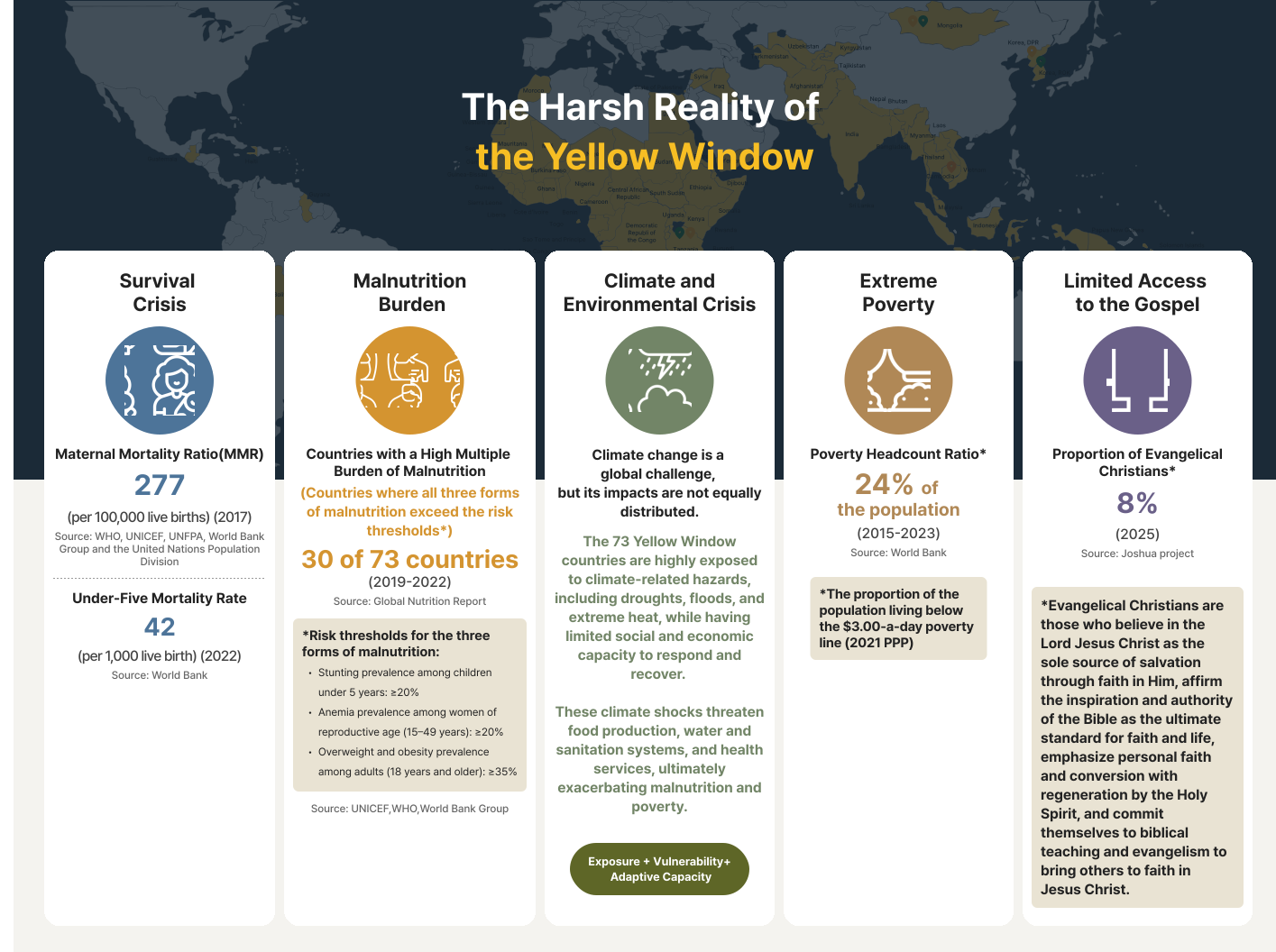
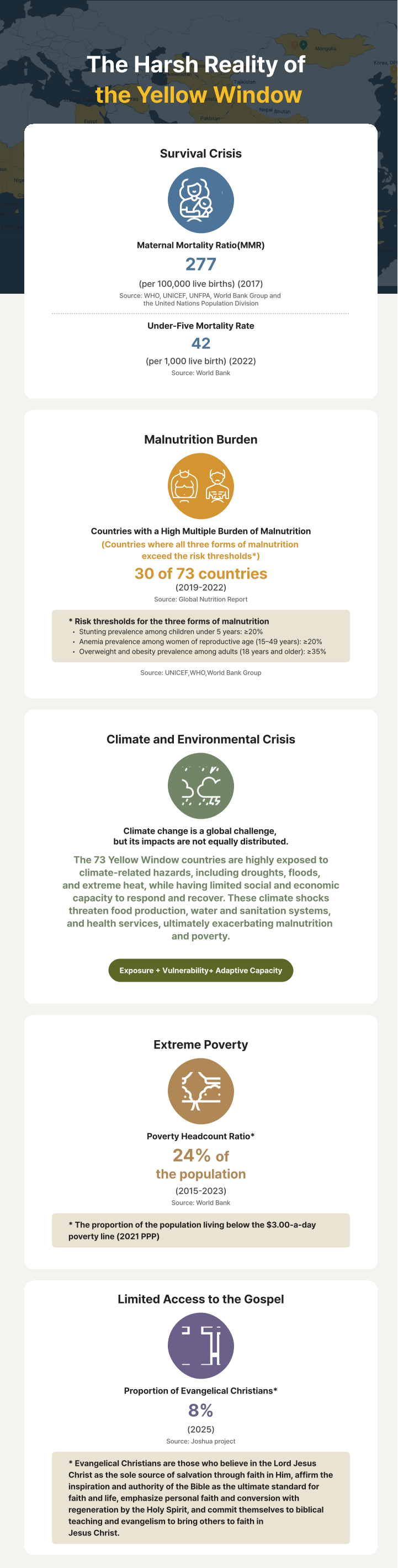
The Harsh Reality of the Yellow Window
Yellow Window Map
The Yellow Window Map visually presents 73 countries where complex vulnerabilities are found, including health and nutrition vulnerability, poverty, and limited gospel access.
Yellow Window Index
The Yellow Window Index is an integrated index developed to comprehensively analyze a country’s overall vulnerability and level of need by equally reflecting health and nutrition, poverty, and gospel access. The index is used to identify each country’s needs and priority areas for health and nutrition improvement and community change. The closer the score is to 100, the higher the vulnerability.


-
 WITH Program area
Mongolia, North Korea, Cambodia, Madagascar, Tanzania
-
 Research Institute
WITH INI(Korea), MIN(Mongolia), EAIN(Tanzania)
12 Swahili-speaking countries
The East African Swahili sphere is a distinct linguistic and cultural community bound together by
Swahili. Ranking as the second most widely used language on the continent after Arabic, Swahili is
an official common language spanning 12 countries, serving as an essential vehicle to connect
people, culture, education, health, and economy.
Leveraging this common linguistic and cultural bond, WITH approaches the 12 Swahili-speaking nations
as a unified health and nutrition region. Through this lens, we build sustainable strategies for
nutritional improvement by implementing tailored regional research, training experts, and scaling up
school feeding models.
Total 14 country
-
- Capital
- Port-au-Prince
- Region
- Latin America and the Caribbean
- Population
- 12 million
- Income Classification
- Lower-Middle-Income Country (LMIC)
- Yellow Window Index
- 60.8(65th out of 197 countries)
- Key Health & Nutrition Challenges
- Humanitarian Crisis and Food Insecurity, Child Stunting and Maternal Nutrition, Fragile Health System and Communicable Diseases, Climate Change and Natural Disasters
Country Overview
Haiti is a Caribbean nation characterized by prolonged political and economic instability and a predominantly smallholder agricultural economy. Recurrent natural disasters—including powerful hurricanes, earthquakes, and floods—have repeatedly damaged critical infrastructure, disrupted agricultural production and food supply chains, and severely undermined the nutritional well-being of the population.
From a health and nutrition perspective, acute and chronic malnutrition among children remains a major public health concern, particularly in underserved areas affected by insecurity and deteriorating infrastructure. Persistent food insecurity, widespread poverty, and limited access to essential health and nutrition services continue to place vulnerable populations at heightened risk. In addition, the weakened healthcare system and inadequate access to safe drinking water and sanitation (WASH) have contributed to recurrent outbreaks of waterborne diseases, including cholera, further exacerbating malnutrition and poor health outcomes.
For these reasons, Haiti is considered a country that requires an integrated approach encompassing food and nutrition security, safe water and sanitation (WASH), maternal and child nutrition, strengthened community health systems, and nutrition interventions for populations living in extreme poverty.Health & Nutrition Situation
Reference: Global Nutrition Report, UNICEF, WHO, World Bank
Pregnant women
Anemia(2019): 48.7%
Infants & Children under 2
Exclusive Breastfeeding(2017):
39.9%
Minimum Acceptable Diet(2017):
11.1%Children under 5
Stunting(2017): 21.9%
Wasting(2017): 3.7%Children & Adolescents
(5-19 years)
Underweight (2016):
Boys 3.4%, Girls 4.4%Adults
Overweight (2016):
Men 51.1%, Women 58.3%
Diabetes (2014):
Men 8.6%, Women 8.8% -
- Capital
- Juba
- Region
- East and Southern Africa
- Population
- 12 million
- Income Classification
- Low-Income Country (LIC)
- Yellow Window Index
- 74.8 (38th out of 197 countries)
- Key Health & Nutrition Challenges
- Conflict and Humanitarian Crisis, Acute Malnutrition and Maternal Nutrition, Climate Change and Food Security, Fragile Health System and Communicable Diseases
Country Overview
-
Health & Nutrition Situation
Reference: Global Nutrition Report, UNICEF, WHO, World Bank
Pregnant women
Anemia(2019): 40.0%
Infants & Children under 2
Exclusive Breastfeeding(2010):
44.5%
Minimum Acceptable Diet:
NAChildren under 5
Stunting(2010): 31.3%
Wasting(2010): 22.7%Children & Adolescents
(5-19 years)
Underweight:
No data availableAdults
Overweight:
No data available
Diabetes:
No data available -

- Capital
- Kinshasa
- Region
- Central Africa
- Population
- 109.28 million
- Income Classification
- Low-Income Country (LIC)
- Yellow Window Index
- 67.8 (51st out of 197 countries)
- Key Health & Nutrition Challenges
- Conflict and Humanitarian Crisis, Infectious Diseases and Widespread Health Inequalities, Maternal and Child Nutrition, Food and Nutrition Insecurity
Country Overview
The Democratic Republic of the Congo (DRC) is one of the largest countries in Africa, located in Central Africa, with abundant natural resources and vast land area. However, decades of armed conflict, political instability, and weak infrastructure have severely constrained the country's health and nutrition systems.
Child stunting, acute malnutrition, and maternal and child nutrition remain major public health challenges. Recurrent outbreaks of infectious diseases, including malaria, measles, cholera, and mpox (formerly monkeypox), continue to place a heavy burden on vulnerable populations. In addition, the country's vast geography, inadequate transportation networks, and limited health infrastructure contribute to significant disparities in access to essential health and nutrition services across regions.
For these reasons, the Democratic Republic of the Congo requires an integrated health and nutrition approach that strengthens life-course nutrition, maternal and child health, infectious disease prevention and control, food and nutrition security, and community-based health systems.Health & Nutrition Situation
Reference: Global Nutrition Report, UNICEF, WHO, World Bank
Pregnant women
Anemia: 46.5% (2019)
Infants & Children under 2
Exclusive Breastfeeding 53.6%
Minimum Acceptable Diet 8.0% (2017)Children under 5
Stunting: 41.8%
Wasting: 6.4% (2016)Children & Adolescents
(5-19 years)
Underweight (2016): Boys 13.0%, Girls 5.7%
Adults
Overweight (2016): Men 18.0%, Women 32.0%
Diabetes (2014): Men 6.2%, Women 6.1% -

- Capital
- Moroni
- Region
- East Africa
- Population
- 0.9 million
- Income Classification
- Lower-Middle-Income Country (LMIC)
- Yellow Window Index
- 86.3 (7th out of 197 countries)
- Key Health & Nutrition Challenges
- Small Island Developing State (SIDS), Maternal and Child Nutrition, Noncommunicable Diseases (NCDs), Climate Change and Food Import Dependency
Country Overview
Comoros is a Small Island Developing State (SIDS) located in the Indian Ocean off the eastern coast of Africa. Agriculture and fisheries provide the primary livelihoods for much of the population. However, the country's limited land area and heavy dependence on imported food make it highly vulnerable to fluctuations in global food prices and the impacts of climate change.
Child stunting and maternal and child nutrition remain important public health concerns. At the same time, changing dietary patterns and rapid urbanization have contributed to rising rates of overweight, obesity, and other diet-related noncommunicable diseases, resulting in an emerging double burden of malnutrition. In addition, climate-related hazards, including tropical storms and sea-level rise, continue to threaten food security, livelihoods, and community health.
For these reasons, Comoros requires an integrated health and nutrition approach that promotes life-course nutrition, healthy diets, climate resilience, food security, and preventive community-based health systems.Health & Nutrition Situation
Reference: Global Nutrition Report, UNICEF, WHO, World Bank
Pregnant women
Anemia: 38.0% (2019)
Infants & Children under 2
Exclusive Breastfeeding 11.4%
Minimum Acceptable Diet 5.2% (2012)Children under 5
Stunting: 31.1%
Wasting: 11.2% (2012)Children & Adolescents
(5-19 years)
Underweight (2016): Boys 9.0%, Girls 4.0%
Adults
Overweight (2016): Men 18.2%, Women 35.7%
Diabetes (2014): Men 7.9%, Women 8.0% -

- Capital
- Nairobi
- Region
- East Africa
- Population
- 56.43 million
- Income Classification
- Lower-Middle-Income Country (LMIC)
- Yellow Window Index
- 77.2 (35th out of 197 countries)
- Key Health & Nutrition Challenges
- Regional Health and Nutrition Disparities, Double Burden of Malnutrition, School Feeding and Community Nutrition
Country Overview
Kenya is one of the economic and trade hubs of East Africa, where agriculture and livestock production play vital roles in the national economy and food system. However, the country's arid and semi-arid lands (ASALs), particularly in the northern regions, continue to experience chronic food insecurity and nutrition crises due to recurrent droughts and the increasing impacts of climate change, resulting in substantial regional disparities in health and nutrition.
Child stunting and micronutrient deficiencies remain significant public health concerns, while rapid urbanization and changing dietary patterns have contributed to rising rates of overweight, obesity, and diet-related noncommunicable diseases, leading to an increasing double burden of malnutrition. At the same time, Kenya has made notable progress in expanding school feeding programmes and community-based nutrition interventions, while strengthening life-course nutrition and preventive health policies.
For these reasons, Kenya requires an integrated health and nutrition approach that links school feeding, life-course nutrition, climate resilience, food security, and healthy diets.Health & Nutrition Situation
Reference: Global Nutrition Report, UNICEF, WHO, World Bank
Pregnant women
Anemia: 40.3% (2019)
Infants & Children under 2
Exclusive Breastfeeding 61.4%
Minimum Acceptable Diet 21.7% (2014)Children under 5
Stunting: 26.2%
Wasting: 4.2% (2014)Children & Adolescents
(5-19 years)
Underweight (2016): Boys 10.5%, Girls 4.7%
Adults
Overweight (2016): Men 16.1%, Women 34.3%
Diabetes (2014): Men 6.2%, Women 5.8% -

- Capital
- Lusaka
- Region
- Southern Africa
- Population
- 21.31 million
- Income Classification
- Lower-Middle-Income Country (LMIC)
- Yellow Window Index
- 66.2 (55th out of 197 countries)
- Key Health & Nutrition Challenges
- Double Burden of Malnutrition, Micronutrient Deficiencies, Climate Change, Maternal and Child Nutrition
Country Overview
Zambia is a landlocked country in southeastern Africa with abundant mineral resources and considerable agricultural potential. Despite steady economic growth, regional disparities in poverty and nutrition persist, and child stunting and micronutrient deficiencies remain major health and nutrition challenges, particularly in rural areas.
In recent years, climate change has intensified droughts and reduced agricultural productivity, threatening food security and rural livelihoods. At the same time, urbanization and changing dietary patterns have contributed to rising rates of overweight, obesity, and other diet-related noncommunicable diseases, resulting in an increasing double burden of malnutrition, in which undernutrition and overnutrition coexist. Improving maternal and child nutrition and strengthening life-course nutrition have therefore become key national health priorities.
For these reasons, Zambia requires an integrated health and nutrition approach that promotes life-course nutrition, micronutrient improvement, climate resilience, food security, and healthy diets.Health & Nutrition Situation
Reference: Global Nutrition Report, UNICEF, WHO, World Bank
Pregnant women
Anemia: 39.3% (2019)
Infants & Children under 2
Exclusive Breastfeeding 69.9%
Minimum Acceptable Diet 12.3% (2018)Children under 5
Stunting: 34.6%
Wasting: 4.2% (2018)Children & Adolescents
(5-19 years)
Underweight (2016): Boys 8.6%, Girls 3.7%
Adults
Overweight (2016): Men 19.0%, Women 36.3%
Diabetes (2014): Men 6.5%, Women 6.7% -

- Capital
- Kampala
- Region
- East Africa
- Population
- 50.02 million
- Income Classification
- Low-Income Country (LIC)
- Yellow Window Index
- 70.0 (45th out of 197 countries)
- Key Health & Nutrition Challenges
- Rapid Population Growth, One of the World's Largest Refugee-Hosting Countries, Infectious Diseases and Community Health, Maternal and Child Nutrition
Country Overview
Uganda is an agriculture-based country in East Africa with fertile land and abundant natural resources. However, rapid population growth, regional economic disparities, and climate change continue to affect food security and the country’s health and nutrition environment.
Child stunting and anemia among pregnant women remain important public health concerns, while infectious diseases such as malaria further increase health risks among nutritionally vulnerable populations. Uganda is also one of the world’s largest refugee-hosting countries, making the strengthening of food security and access to essential health and nutrition services for refugees and other vulnerable populations an important national priority.
For these reasons, Uganda requires an integrated health and nutrition approach that links life-course nutrition, maternal and child health, community-based health services, food security, and support for vulnerable populations, including refugees.Health & Nutrition Situation
Reference: Global Nutrition Report, UNICEF, WHO, World Bank
Pregnant women
Anemia: 38.9% (2019)
Infants & Children under 2
Exclusive Breastfeeding 65.5%
Minimum Acceptable Diet 14.5% (2016)Children under 5
Stunting: 25.4%
Wasting: 3.6% (2020)Children & Adolescents
(5-19 years)
Underweight (2016): Boys 8.1%, Girls 2.9%
Adults
Overweight (2016): Men 13.7%, Women 30.9%
Diabetes (2014): Men 4.4%, Women 4.7% -

- Capital
- Mogadishu
- Region
- East Africa
- Population
- 19.01 million
- Income Classification
- Low-Income Country (LIC)
- Yellow Window Index
- 89.8 (3rd out of 197 countries)
- Key Health & Nutrition Challenges
- Acute Malnutrition, Protracted Conflict and Food Crisis, Climate Crisis and Water Scarcity, Fragile Health System
Country Overview
Somalia is located in the Horn of Africa and is experiencing one of the world’s most severe humanitarian crises due to protracted conflict and recurrent climate-related disasters. Droughts, floods, and economic instability continue to threaten food production and livelihoods, leaving many people dependent on emergency food assistance.
Acute malnutrition among children and maternal and child nutrition challenges remain extremely serious. A fragile health system and inadequate access to safe water, sanitation and hygiene (WASH) further increase the risks of infectious diseases and malnutrition. In addition, the large numbers of internally displaced persons (IDPs) and pastoral populations face substantial barriers to accessing essential health and nutrition services.
For these reasons, Somalia requires an integrated health and nutrition approach that builds on emergency nutrition assistance and maternal and child health, while strengthening food security, water, sanitation and hygiene (WASH), climate resilience, and community-based health systems.Health & Nutrition Situation
Reference: Global Nutrition Report, UNICEF, WHO, World Bank
Pregnant women
Anemia: 48.7% (2019)
Infants & Children under 2
Exclusive Breastfeeding 33.7%
Minimum Acceptable Diet -% (2018)Children under 5
Stunting: 25.3%
Wasting: 14.3% (2009)Children & Adolescents
(5-19 years)
Underweight (2016): Boys 8.7%, Girls 4.3%
Adults
Overweight (2016): Men 20.3%, Women 35.9%
Diabetes (2014): Men 7.4%, Women 6.2% -

- Capital
- Gitega
- Region
- East Africa
- Population
- 14.05 million
- Income Classification
- Low-Income Country (LIC)
- Yellow Window Index
- 71.7 (42nd out of 197 countries)
- Key Health & Nutrition Challenges
- Severe Child Stunting, Smallholder Agriculture and Food Security, Micronutrient Deficiencies
Country Overview
Burundi is a landlocked country in East Africa and one of the most densely populated countries in the world. Most of the population depends on smallholder agriculture; however, limited arable land and low agricultural productivity make the country highly vulnerable to food insecurity.
Child stunting and maternal and child nutrition remain serious public health challenges. Inadequate access to water, sanitation and hygiene (WASH) and essential health services further increases the risks of infectious diseases and malnutrition. Recurrent climate-related shocks and economic vulnerability continue to threaten community livelihoods and nutritional well-being.
For these reasons, Burundi requires an integrated health and nutrition approach that brings together life-course nutrition, food security, maternal and child health, water, sanitation and hygiene (WASH), and strengthened community agriculture and resilience.Health & Nutrition Situation
Reference: Global Nutrition Report, UNICEF, WHO, World Bank
Pregnant women
Anemia: 44.2% (2019)
Infants & Children under 2
Exclusive Breastfeeding 71.9% (2019)
Minimum Acceptable Diet 10.2% (2016)Children under 5
Stunting: 50.9%
Wasting: 5.7% (2020)Children & Adolescents
(5-19 years)
Underweight (2016): Boys 9.7%, Girls 4.8%
Adults
Overweight (2016): Men 13.9%, Women 30.1%
Diabetes (2014): Men 4.2%, Women 4.1% -

- Capital
- Maputo
- Region
- Southeastern Africa
- Population
- 34.63 million
- Income Classification
- Low-Income Country (LIC)
- Yellow Window Index
- 79.5 (27th out of 197 countries)
- Key Health & Nutrition Challenges
- Climate-Related Disasters and Food Security, Maternal and Child Health, Infectious Diseases, Inadequate Water, Sanitation and Hygiene (WASH)
Country Overview
Mozambique is located along the Indian Ocean coast of southeastern Africa, where most of the population depends on agriculture for their livelihoods. However, recurrent climate-related disasters—including cyclones, floods, and droughts—have significantly affected food production and household livelihoods, placing sustained pressure on food security and nutritional well-being.
Child stunting and maternal and child nutrition remain major health and nutrition challenges. The high burden of infectious diseases, including malaria and HIV/AIDS, further increases health risks among nutritionally vulnerable populations. In addition, regional disparities in access to water, sanitation and hygiene (WASH) and essential health services continue to limit the sustainability of nutrition improvements.
For these reasons, Mozambique requires an integrated health and nutrition approach that links life-course nutrition, maternal and child health, climate resilience, food security, and water, sanitation and hygiene (WASH).Health & Nutrition Situation
Reference: Global Nutrition Report, UNICEF, WHO, World Bank
Pregnant women
Anemia: 45.8%(2019)
Infants & Children under 2
Exclusive Breastfeeding 41.0% (2013)
Minimum Acceptable Diet 13.2% (2011)Children under 5
Stunting: 37.5%
Wasting: 3.9% (2020)Children & Adolescents
(5-19 years)
Underweight (2016): Boys 4.2%, Girls 2.8%
Adults
Overweight (2016): Men 18.0%, Women 33.6%
Diabetes (2014): Men 6.6%, Women 6.2% -

- Capital
- Lilongwe
- Region
- East Africa
- Population
- 21.66 million
- Income Classification
- Low-Income Country (LIC)
- Yellow Window Index
- 73.8 (39th out of 197 countries)
- Key Health & Nutrition Challenges
- Limited Dietary Diversity, Chronic Malnutrition, HIV and Nutrition, Climate Change and Agricultural Vulnerability
Country Overview
Malawi is a landlocked country in southeastern Africa, where most of the population depends on smallholder agriculture for their livelihoods. The national economy and food supply rely heavily on maize-based farming, making the country highly vulnerable to climate change and natural disasters.
Limited dietary diversity and recurrent food shortages continue to contribute to child stunting and micronutrient deficiencies. The country’s high HIV burden further increases the importance of appropriate nutrition care and accessible health services. More recently, climate-related declines in agricultural productivity and rising food prices have placed nutritionally vulnerable populations at greater risk.
For these reasons, Malawi requires an integrated health and nutrition approach that links improved dietary diversity, life-course nutrition, climate-resilient agriculture, and community-based health services.Health & Nutrition Situation
Reference: Global Nutrition Report, UNICEF, WHO, World Bank
Pregnant women
Anemia: 39.3% (2019)
Infants & Children under 2
Exclusive Breastfeeding 59.4%
Minimum Acceptable Diet 8.0% (2015)Children under 5
Stunting: 35.5%
Wasting: 2.6% (2020)Children & Adolescents
(5-19 years)
Underweight (2016): Boys 9.5%, Girls 3.0%
Adults
Overweight (2016): Men 14.8%, Women 31.5%
Diabetes (2014): Men 6.6%, Women 6.0% -

- Capital
- Antananarivo
- Region
- East Africa
- Population
- 31.96 million
- Income Classification
- Low-Income Country (LIC)
- Yellow Window Index
- 81.6 (19th out of 197 countries)
- Key Health & Nutrition Challenges
- Chronic Malnutrition, Climate Change and Food Security, Maternal and Child Nutrition and Micronutrient Deficiencies, Water, Sanitation and Hygiene (WASH) and Infectious Diseases
Country Overview
Madagascar is an island nation located in the Indian Ocean off the southeastern coast of Africa. Its economy and livelihoods depend heavily on agriculture and natural resources. However, recurrent droughts, cyclones, and other climate-related shocks have destabilized food production, leaving many households affected by chronic food insecurity and poverty.
Child stunting among children under five and anemia among pregnant women remain major public health concerns. Inadequate access to safe water and sanitation, together with infectious diseases, further contributes to poor nutritional outcomes. As climate change continues to intensify food insecurity, the need for an integrated response targeting nutritionally vulnerable populations is becoming increasingly urgent.
For these reasons, Madagascar requires an integrated health and nutrition approach that brings together maternal and child nutrition, school feeding, climate resilience, food security, and water, sanitation and hygiene (WASH).Health & Nutrition Situation
Reference: Global Nutrition Report, UNICEF, WHO, World Bank
Pregnant women
Anemia: 39.3% (2019)
Infants & Children under 2
Exclusive Breastfeeding 50.6%
Minimum Acceptable Diet 21.5% (2018)Children under 5
Stunting: 39.8%
Wasting: 7.7% (2021)Children & Adolescents
(5-19 years)
Underweight (2016): Boys 8.8%, Girls 5.3%
Adults
Overweight (2016): Men 17.7%, Women 29.6%
Diabetes (2014): Men 6.3%, Women 4.8% -

- Capital
- Kigali
- Region
- East Africa
- Population
- 14.26 million
- Income Classification
- Low-Income Country (LIC)
- Yellow Window Index
- 69.2 (47th out of 197 countries)
- Key Health & Nutrition Challenges
- Child Stunting, Maternal and Child Nutrition, Climate Change and Food Security, Community Health Systems
Country Overview
Rwanda is a landlocked country in East Africa characterized by high population density and limited arable land. A substantial share of its economy and food production depends on smallholder agriculture, making the country highly vulnerable to climate change and natural disasters.
Over recent decades, Rwanda has made significant progress in strengthening its health system and community-based health services, resulting in substantial improvements in maternal and child health outcomes. However, child stunting and micronutrient deficiencies remain important health and nutrition challenges. In addition, climate-related instability in food production continues to affect nutrition security at the community level.
For these reasons, Rwanda requires an integrated health and nutrition approach that builds on its community-based health system and nutrition services while addressing climate resilience, food security, and nutrition security.Health & Nutrition Situation
Reference: Global Nutrition Report, UNICEF, WHO, World Bank
Pregnant women
Anemia: 23.5% (2019)
Infants & Children under 2
Exclusive Breastfeeding 80.9% (2020)
Minimum Acceptable Diet 18.1%(2015)Children under 5
Stunting:33.1%
Wasting: 1.1% (2020)Children & Adolescents
(5-19 years)
Underweight (2016): Boys 8.8%, Girls 2.8%
Adults
Overweight (2016): Men 15.6%, Women 33.5%
Diabetes (2014): Men 4.3%, Women 4.5% -

- Capital
- Dodoma
- Region
- East Africa
- Population
- 68.56 million
- Income Classification
- Lower-Middle-Income Country (LMIC)
- Yellow Window Index
- 81.4 (21st out of 197 countries)
- Key Health & Nutrition Challenges
- Child Stunting, Maternal Anemia, Food Security, Underdeveloped School Feeding System
Country Overview
Tanzania is located in East Africa, where agriculture serves as a central pillar of both the national economy and household livelihoods, with a large share of the population living in rural areas. Because agricultural production depends heavily on rainfall, the country is highly vulnerable to climate-related shocks such as droughts and floods. These pressures directly affect food production, food security, and the nutritional well-being of local communities.
From a health and nutrition perspective, child stunting and micronutrient deficiencies remain major public health concerns, while limited dietary diversity and maternal and child nutrition challenges continue to persist. At the same time, rising levels of overweight and obesity, particularly in urban areas, are contributing to an expanding double burden of malnutrition, in which undernutrition and overnutrition coexist. Regional disparities in access to health services and water, sanitation and hygiene (WASH) also contribute to widening health inequalities.
For these reasons, Tanzania is regarded as a representative East African country that requires an integrated approach linking life-course nutrition, school feeding, maternal and child nutrition, food system improvement, community health systems, and nutrition security that incorporates climate resilience.Health & Nutrition Situation
Reference: Global Nutrition Report, UNICEF, WHO, World Bank
Pregnant women
Anemia: 48.1% (2019)
Infants & Children under 2
Exclusive Breastfeeding 57.8% (2018)
Minimum Acceptable Diet 8.6% (2015)Children under 5
Stunting:31.8%
Wasting: 3.5% (2021)Children & Adolescents
(5-19 years)
Underweight (2016): Boys 9.0%, Girls 4.1%
Adults
Overweight (2016): Men 19.6%, Women 35.5%
Diabetes (2014): Men 6.0%, Women 6.1%
Other African countries
Total 18 Country
-
- Capital
- Bangui
- Region
- West and Central Africa
- Population
- 5.3 million
- Income Classification
- Low-Income Country (LIC)
- Yellow Window Index
- 85.3(10th out of 197 countries)
- 핵심 보건영양 이슈
- Conflict and Humanitarian Crisis, Acute Malnutrition and Maternal Nutrition, Fragile Health System and Communicable Diseases, Food Security and Climate Change
Country Overview
The Central African Republic is a landlocked country in Central Africa. Although it is endowed with abundant natural resources, prolonged armed conflict and political instability have made it one of the world’s most fragile countries. Recurrent violence and large-scale displacement, including internally displaced persons and refugees, have severely disrupted livelihoods and food production while placing major constraints on the delivery of essential health and nutrition services.
From a health and nutrition perspective, acute malnutrition and stunting among children, as well as undernutrition among pregnant and lactating women, remain severe public health concerns. Recurrent outbreaks of communicable diseases—including malaria, measles, and cholera—combined with a fragile healthcare system, continue to restrict access to essential health and nutrition services. Inadequate access to safe drinking water and sanitation (WASH) further intensifies the vicious cycle between infectious diseases and malnutrition.
More recently, climate change—including shifting rainfall patterns, flooding, and declining agricultural productivity—has further weakened food systems and community resilience, creating additional risks to both food security and nutrition security.
For these reasons, the Central African Republic is considered a major humanitarian crisis country requiring an integrated approach encompassing life-course nutrition, maternal and child nutrition, prevention and treatment of acute malnutrition, food and nutrition security, WASH, strengthened community health systems, and climate resilience.Health & Nutrition Situation
Reference: Global Nutrition Report, UNICEF, WHO, World Bank
Pregnant women
Anemia(2019): 51.5%
Infants & Children under 2
Exclusive Breastfeeding(2019):
36.2%
Minimum Acceptable Diet(2010):
8.6%Children under 5
Stunting(2019): 39.8%
Wasting(2019): 5.4%Children & Adolescents
(5-19 years)
Underweight (2016):
Boys 11.3%, Girls 5.2%Adults
Overweight (2016):
Men 18.3%, Women 33.2%
Diabetes (2014):
Men 8.0%, Women 7.6% -
- Capital
- Gaborone
- Region
- Southern Africa
- Population
- 2.5 million
- Income Classification
- Upper-Middle-Income Country (UMIC)
- Yellow Window Index
- 53.5(80th out of 197 countries)
- 핵심 보건영양 이슈
- HIV/AIDS and Nutrition, Double Burden of Malnutrition, Climate Change and Food Security, Regional Disparities in Health and Nutrition
Country Overview
Botswana is a Southern African country that has achieved sustained economic growth driven largely by its diamond mining industry and is classified as an Upper-Middle-Income Country. Despite its relatively strong economic performance, the country faces persistent challenges, including high unemployment, pronounced income inequality, and one of the world's highest HIV prevalence rates.
Most of Botswana is covered by the Kalahari Desert, making it highly vulnerable to recurrent droughts and the increasing impacts of climate change. More frequent droughts and El Niño events have adversely affected livestock production, rain-fed agriculture, and water availability, posing growing threats to rural livelihoods and food security.
From a health and nutrition perspective, undernutrition has declined over recent decades; however, food insecurity and micronutrient deficiencies continue to affect vulnerable populations, particularly in rural and low-income communities. At the same time, changing dietary patterns and urbanization have contributed to rising rates of overweight, obesity, diabetes, and other non-communicable diseases, resulting in a growing Double Burden of Malnutrition. In addition, the high burden of HIV/AIDS continues to increase nutritional vulnerability and places considerable pressure on the healthcare system.
For these reasons, Botswana is considered a country that requires an integrated approach encompassing food and nutrition security, safe water and sanitation (WASH), nutrition interventions for vulnerable populations, HIV-sensitive nutrition programs, and climate-resilient agriculture and food systems.Health & Nutrition Situation
Reference: Global Nutrition Report, UNICEF, WHO, World Bank
Pregnant women
Anemia(2019): 31.4%
Infants & Children under 2
Exclusive Breastfeeding(2017):
30.0%
Minimum Acceptable Diet:
NAChildren under 5
Stunting(2007): 28.9%
Wasting(2007): 10.0%Children & Adolescents
(5-19 years)
Underweight (2016):
Boys 9.6%, Girls 2.9%Adults
Overweight (2016):
Men 29.7%, Women 56.5%
Diabetes (2014):
Men 7.6%, Women 9.5% -
- Capital
- Ouagadougou
- Region
- West Africa
- Population
- 24 million
- Income Classification
- Low-Income Country (LIC)
- Yellow Window Index
- 81.4(21st out of 197 countries)
- 핵심 보건영양 이슈
- Conflict and Humanitarian Crisis, Acute Malnutrition and Maternal Nutrition, Climate Change and Food Security, Fragile Health System and Communicable Diseases
Country Overview
Burkina Faso is a landlocked country in the Sahel region of West Africa, where agriculture and livestock production form the backbone of the national economy and rural livelihoods. However, recurrent droughts, climate change, prolonged armed conflict, and insecurity have continuously disrupted food production and threatened community livelihoods. Large-scale internal displacement has further intensified the country's humanitarian crisis.
From a health and nutrition perspective, childhood stunting, acute malnutrition (wasting), and undernutrition and anemia among pregnant and lactating women remain severe public health challenges. Improving maternal and child nutrition during the first 1,000 days of life continues to be a national nutrition priority, while recurrent food shortages and communicable diseases further increase the vulnerability of women and children.
Climate change—including recurrent droughts, erratic rainfall, and desertification—has reduced agricultural productivity and weakened livestock production systems, posing persistent threats to food security and nutrition security. At the same time, conflict-related closure of health facilities and shortages of healthcare workers have severely limited access to essential health and nutrition services. Communicable diseases such as malaria and diarrheal diseases further exacerbate malnutrition, creating a vicious cycle that disproportionately affects children and women.
For these reasons, Burkina Faso is considered a representative Sahelian country that requires an integrated approach encompassing life-course nutrition, maternal and child nutrition, prevention and treatment of acute malnutrition, food and nutrition security, strengthened community health systems, WASH, and climate resilience.Health & Nutrition Situation
Reference: Global Nutrition Report, UNICEF, WHO, World Bank
Pregnant women
Anemia(2019): 55.3%
Infants & Children under 2
Exclusive Breastfeeding(2019):
57.9%
Minimum Acceptable Diet(2019):
27.2%Children under 5
Stunting(2020): 19.6%
Wasting(2020): 7.7%Children & Adolescents
(5-19 years)
Underweight (2016):
Boys 9.9%, Girls 5.6%Adults
Overweight (2016):
Men 16.1%, Women 29.2%
Diabetes (2014):
Men 7.4%, Women 5.5% -
- Capital
- Porto-Novo
- Region
- West Africa
- Population
- 14 million
- Income Classification
- Lower-Middle-Income Country (LMIC)
- Yellow Window Index
- 78.6(31st out of 197 countries)
- 핵심 보건영양 이슈
- Child Stunting and Maternal Nutrition, Regional Disparities in Health and Nutrition, Food Security and Limited Dietary Diversity, Climate Change and Agricultural Vulnerability
Country Overview
Benin is a West African country with an economy that relies heavily on cotton production as its principal cash crop. The country's agricultural sector remains highly vulnerable to external market fluctuations as well as the impacts of climate change. Increasingly erratic droughts and floods have reduced the production of staple crops, posing growing threats to food security and the nutritional well-being of the population.
From a health and nutrition perspective, chronic malnutrition (stunting) among children and limited dietary diversity remain persistent challenges, particularly in economically and geographically marginalized communities. Vulnerable populations continue to experience inadequate access to nutritious foods, contributing to poor nutritional outcomes. In addition, significant regional disparities persist in access to essential healthcare, nutrition services, and safe water and sanitation (WASH), especially in rural areas.
For these reasons, Benin is considered a country that requires an integrated approach encompassing food and nutrition security, safe water and sanitation (WASH), nutrition interventions for populations living in extreme poverty, strengthened community health systems, and improved access to essential health and nutrition services.Health & Nutrition Situation
Reference: Global Nutrition Report, UNICEF, WHO, World Bank
Pregnant women
Anemia(2019): 58.1%
Infants & Children under 2
Exclusive Breastfeeding(2018):
41.4%
Minimum Acceptable Diet(2018):
14.5%Children under 5
Stunting(2018): 32.2%
Wasting(2018): 5.0%Children & Adolescents
(5-19 years)
Underweight (2016):
Boys 9.8%, Girls 3.8%Adults
Overweight (2016):
Men 21.2%, Women 37.3%
Diabetes (2014):
Men 7.4%, Women 7.0% -
- Capital
- Niamey
- Region
- West and Central Africa
- Population
- 27 million
- Income Classification
- Low-Income Country (LIC)
- Yellow Window Index
- 93.1(1st out of 197 countries)
- 핵심 보건영양 이슈
- Acute Malnutrition and Maternal Nutrition, Climate Change and Food Security, Conflict and Humanitarian Crisis in the Sahel, Fragile Health System and Communicable Diseases
Country Overview
Niger is a landlocked country in the Sahel region of West Africa, with most of its territory covered by the Sahara Desert. Agriculture and livestock production are the primary sources of livelihood for the majority of the population. However, recurrent droughts, desertification, erratic rainfall, rapid population growth, and ongoing insecurity in neighboring regions continue to threaten food production and community livelihoods.
From a health and nutrition perspective, acute malnutrition, childhood stunting, and maternal and child malnutrition remain among the country's most pressing public health challenges. In addition, the high burden of communicable diseases—including malaria, measles, and diarrheal diseases—combined with a fragile healthcare system, continues to limit access to essential health and nutrition services. More recently, climate change and the prolonged humanitarian crisis have further weakened food systems and nutrition security, increasing health risks among vulnerable populations.
For these reasons, Niger is considered a representative Sahelian country that requires an integrated approach encompassing life-course nutrition, maternal and child nutrition, prevention and treatment of acute malnutrition, food and nutrition security, strengthened community health systems, and climate resilience.Health & Nutrition Situation
Reference: Global Nutrition Report, UNICEF, WHO, World Bank
Pregnant women
Anemia(2019): 54.9%
Infants & Children under 2
Exclusive Breastfeeding(2019):
21.6%
Minimum Acceptable Diet(2019):
14.9%Children under 5
Stunting(2021): 44.4%
Wasting(2021): 11.5%Children & Adolescents
(5-19 years)
Underweight (2016):
Boys 12.5%, Girls 6.2%Adults
Overweight (2016):
Men 14.6%, Women 29.7%
Diabetes (2014):
Men 5.9%, Women 5.3% -
- Capital
- Maseru
- Region
- East and Southern Africa
- Population
- 2.3 million
- Income Classification
- Lower-Middle-Income Country (LMIC)
- Yellow Window Index
- 68.3(49th out of 197 countries)
- 핵심 보건영양 이슈
- Child Stunting and Maternal Nutrition, HIV/AIDS and Nutrition, Climate Change and Food Security, Fragile Health System and Regional Health, Disparities
Country Overview
-
Health & Nutrition Situation
Reference: Global Nutrition Report, UNICEF, WHO, World Bank
Pregnant women
Anemia(2019): 33.5%
Infants & Children under 2
Exclusive Breastfeeding(2018):
59.0%
Minimum Acceptable Diet(2018):
10.4%Children under 5
Stunting(2018): 34.6%
Wasting(2018): 2.1%Children & Adolescents
(5-19 years)
Underweight (2016):
Boys 9.1%, Girls 1.6%Adults
Overweight (2016):
Men 21.1%, Women 53.7%
Diabetes (2014):
Men 7.3%, Women 9.9% -
- Capital
- Monrovia
- Region
- West Africa
- Population
- 5.6 million
- Income Classification
- Low-Income Country(LIC)
- Yellow Window Index
- 82.0(18th out of 197 countries)
- 핵심 보건영양 이슈
- Child Stunting and Maternal Nutrition, Fragile Health System and Communicable Diseases, Food Security and Limited Dietary Diversity, Climate Change and Agricultural Vulnerability
Country Overview
-
Health & Nutrition Situation
Reference: Global Nutrition Report, UNICEF, WHO, World Bank
Pregnant women
Anemia(2019): 49.7%
Infants & Children under 2
Exclusive Breastfeeding(2019):
55.2%
Minimum Acceptable Diet(2019):
3.1%Children under 5
Stunting(2019): 29.8%
Wasting(2019): 3.4%Children & Adolescents
(5-19 years)
Underweight (2016):
Boys 9.2%, Girls 3.5%Adults
Overweight (2016):
Men 23.2%, Women 38.3%
Diabetes (2014):
Men 7.8%, Women 7.6% -
- Capital
- Abuja
- Region
- West Africa
- Population
- 233 million
- Income Classification
- Lower-Middle-Income Country (LMIC)
- Yellow Window Index
- 75.6 (37th out of 197 countries)
- 핵심 보건영양 이슈
- Child Stunting and Maternal Nutrition, Food Crisis in Northern Nigeria and Regional Disparities in Health and Nutrition, Double Burden of Malnutrition, Climate Change and Food Security
Country Overview
-
Health & Nutrition Situation
Reference: Global Nutrition Report, UNICEF, WHO, World Bank
Pregnant women
Anemia(2019): 55.9%
Infants & Children under 2
Exclusive Breastfeeding(2018):
28.7%
Minimum Acceptable Diet(2018):
10.3%Children under 5
Stunting(2020): 31.5%
Wasting(2020): 6.5%Children & Adolescents
(5-19 years)
Underweight (2016):
Boys 10.2%, Girls 8.8%Adults
Overweight (2016):
Men 21.7%, Women 36.1%
Diabetes (2014):
Men 6.3%, Women 6.0% -
- Capital
- Windhoek
- Region
- Southern Africa
- Population
- 3 million
- Income Classification
- Upper-Middle-Income Country (UMIC)
- Yellow Window Index
- 56.6 (72nd out of 197 countries)
- 핵심 보건영양 이슈
- Regional Disparities in Health and Nutrition, Double Burden of Malnutrition, Climate Change and Food Security, Maternal Nutrition and Child Stunting
Country Overview
-
Health & Nutrition Situation
Reference: Global Nutrition Report, UNICEF, WHO, World Bank
Pregnant women
Anemia(2019): 29.0%
Infants & Children under 2
Exclusive Breastfeeding(2013):
48.3%
Minimum Acceptable Diet(2013):
11.6%Children under 5
Stunting(2013): 22.7%
Wasting(2013): 7.1%Children & Adolescents
(5-19 years)
Underweight (2016):
Boys 10.8%, Girls 5.5%Adults
Overweight (2016):
Men 27.2%, Women 51.9%
Diabetes (2014):
Men 7.3%, Women 7.5% -

- Capital
- Bissau
- Region
- West Africa
- Population
- 2.2 million (2024)
- Income Classification
- Low-Income Country (LIC)
- Yellow Window Index
- 83.95 (12th out of 197 countries)
- 핵심 보건영양 이슈
- Child Stunting and Maternal Nutrition, Food Security and Micronutrient Deficiencies, Fragile Health System and Communicable Diseases, Climate Change and Vulnerable Food Systems
Country Overview
Guinea-Bissau is a West African country with an economy heavily dependent on cashew production and a predominantly rural population. Agriculture remains the primary source of livelihood for most households. However, climate change—including increasingly erratic rainfall patterns and saltwater intrusion along coastal areas—has accelerated soil salinization, posing growing threats to agricultural productivity and the sustainability of cashew cultivation.
From a health and nutrition perspective, food insecurity and undernutrition remain major public health challenges. The number of people experiencing acute food insecurity has continued to increase in recent years, while limited public resources have constrained access to essential healthcare and nutrition services. Inadequate access to safe drinking water and sanitation (WASH) further exacerbates the burden of malnutrition and infectious diseases, particularly among women and young children.
For these reasons, Guinea-Bissau is considered a country that requires an integrated approach encompassing food and nutrition security, safe water and sanitation (WASH), maternal and child nutrition, strengthened community health systems, and nutrition interventions targeting populations living in extreme poverty.Health & Nutrition Situation
Reference: Global Nutrition Report, UNICEF, WHO, World Bank
Pregnant women
Anemia: 52.3% (2019)
Infants & Children under 2
Exclusive Breastfeeding 59.3% (2019)
Minimum Acceptable Diet 2.7% (2019)Children under 5
Stunting: 27.7%
Wasting: 5.1% (2019)Children & Adolescents
(5-19 years)
Underweight (2016): Boys 9.9%, Girls 4.2%
Adults
Overweight (2016): Men 22.2%, Women 37.2%
Diabetes (2014): Men 7.4%, Women 6.8% -

- Capital
- Accra
- Region
- West Africa
- Population
- 34 million (2024)
- Income Classification
- Lower-Middle-Income Country (LMIC)
- Yellow Window Index
- 66.00 (56th out of 197 countries)
- 핵심 보건영양 이슈
- Child Food Poverty and Micronutrient Deficiencies, Double Burden of Malnutrition, North–South Disparities in Health and Nutrition, Climate Change and Sustainable Food Systems
Country Overview
Ghana is located in West Africa and, despite relatively stable economic growth, continues to have a large rural population and a strong dependence on agriculture. Increasing climate shocks—including severe droughts in the northern regions and frequent flooding in the south—are disrupting staple crop production and creating growing uncertainty for household food security and nutritional well-being.
From a health and nutrition perspective, childhood stunting, anemia, and micronutrient deficiencies remain important public health challenges. In particular, inadequate dietary diversity and the high burden of anemia continue to affect the healthy growth and development of children and women.
For these reasons, Ghana is considered a country that requires integrated interventions addressing food and nutrition security, safe water and sanitation (WASH), maternal and child nutrition, micronutrient deficiencies, and the nutritional vulnerability of low-income and rural populations.Health & Nutrition Situation
Reference: Global Nutrition Report, UNICEF, WHO, World Bank
Pregnant women
Anemia: 47.2% (2019)
Infants & Children under 2
Exclusive Breastfeeding 42.9%
Minimum Acceptable Diet 13.0% (2017)Children under 5
Stunting: 17.5%
Wasting: 6.8% (2017)Children & Adolescents
(5-19 years)
Underweight (2019, estimated): Boys 9.0%, Girls 3.2%
Adults
Overweight (2016): Men 22.1%, Women 41.0%
Diabetes (2014): Men 6.4%, Women 6.6% -

- Capital
- Rabat
- Region
- North Africa
- Population
- 38 million (2024)
- Income Classification
- Lower-Middle-Income Country (LMIC)
- Yellow Window Index
- 70.68 (43rd out of 197 countries)
- 핵심 보건영양 이슈
- Regional Disparities in Health and Nutrition, Double Burden of Malnutrition, Climate Change and Water Scarcity, Maternal Nutrition and Micronutrient Deficiencies
Country Overview
Morocco is a North African country bordering both the Mediterranean Sea and the Atlantic Ocean, with agriculture, tourism, and manufacturing serving as key pillars of its economy. Over the past few decades, the country has made substantial progress in strengthening its healthcare system and advancing socioeconomic development. However, disparities in access to health and nutrition services between urban and rural areas remain an important challenge.
From a health and nutrition perspective, childhood stunting and maternal malnutrition have steadily improved, although micronutrient deficiencies and anemia persist in some rural communities. At the same time, rapid urbanization and changing dietary patterns have led to increasing rates of overweight, obesity, diabetes, and other non-communicable diseases, resulting in a growing Double Burden of Malnutrition, where undernutrition and overnutrition coexist. In addition, climate change—particularly recurrent droughts and water scarcity—is affecting agricultural production and food systems, emerging as a significant threat to both food security and nutrition security.
For these reasons, Morocco is considered a country that requires an integrated approach encompassing life-course nutrition, maternal and child nutrition, the promotion of healthy diets, nutrition security with climate resilience, and the reduction of regional health disparities.Health & Nutrition Situation
Reference: Global Nutrition Report, UNICEF, WHO, World Bank
Pregnant women
Anemia: 32.6% (2019)
Infants & Children under 2
Exclusive Breastfeeding 35.0% (2017)
Minimum Acceptable Diet -%Children under 5
Stunting: 15.1%
Wasting: 2.6% (2017)Children & Adolescents
(5-19 years)
Underweight (2016): Boys 7.7%, Girls 5.0%
Adults
Overweight (2016): Men 56.4%, Women 64.0%
Diabetes (2014): Men 14.0%, Women 13.4% -

- Capital
- Brazzaville
- Region
- Central Africa
- Population
- 12.8 million
- Income Classification
- Lower-Middle-Income Country
- Yellow Window Index
- 59.84 (67th out of 197 countries)
- 핵심 보건영양 이슈
- Child Stunting and Maternal Nutrition, Regional Disparities in Health and Nutrition, Communicable Diseases and a Fragile Health System, Double Burden of Malnutrition
Country Overview
The Republic of the Congo is a Central African country endowed with abundant petroleum and forest resources, with the oil industry serving as a major pillar of its economy. Despite steady economic growth, however, significant income inequality and regional development disparities persist, particularly between urban and rural areas, where access to healthcare and nutrition services remains limited.
From a health and nutrition perspective, childhood stunting, anemia among pregnant women and women of reproductive age, and micronutrient deficiencies in infants and young children remain major public health challenges. Improving maternal nutrition and ensuring adequate nutrition during the first 1,000 days of life continue to be national priorities within the country's nutrition strategy.
Communicable diseases, including malaria, tuberculosis, and HIV/AIDS, continue to impose a substantial disease burden. In addition, inadequate access to safe drinking water and sanitation (WASH) in some areas contributes to diarrheal diseases and further exacerbates malnutrition. Compared with urban centers such as Brazzaville and Pointe-Noire, rural and forested regions have more limited access to healthcare and nutrition services, resulting in persistent health inequities.
At the same time, rapid urbanization and changing dietary patterns have led to increasing rates of overweight, obesity, hypertension, diabetes, and other non-communicable diseases, contributing to a growing Double Burden of Malnutrition, where undernutrition and overnutrition coexist.
For these reasons, the Republic of the Congo is considered a Central African country that requires an integrated health and nutrition approach encompassing life-course nutrition, maternal and child nutrition, prevention and control of communicable diseases, strengthening of community health systems, promotion of healthy diets, and reduction of regional health and nutrition inequities.Health & Nutrition Situation
Reference: Global Nutrition Report, UNICEF, WHO, World Bank
Pregnant women
Anemia: 51.0% (2019)
Infants & Children under 2
Exclusive Breastfeeding: 32.9%
Minimum Acceptable Diet: 4.4% (2014)Children under 5
Stunting: 21.2%
Wasting: 8.2% (2014)Children & Adolescents
(5-19 years)
Underweight (2016) : Boys 9.9%, Girls 4.7%
Adults
Overweight (2016): Men 24.2%, Women: 37.4%
Diabetes (2014): Men 7.7%, Women 7.6% -

- Capital
- Nouakchott
- Region
- West Africa
- Population
- 5.17 million
- Income Classification
- Lower-Middle-Income Country (LMIC)
- Yellow Window Index
- 86.4 (6th out of 197 countries)
- 핵심 보건영양 이슈
- Acute Malnutrition, Climate Change and Pastoral Livelihoods, Dependence on Food Imports, Refugee Influx and Nutrition of Vulnerable Populations
Country Overview
Mauritania is a vast desert country located in the Sahel region of northwestern Africa. Its population is widely dispersed across the country, and both agriculture and pastoral livelihoods are highly dependent on climatic conditions and water availability. Recurrent droughts, floods, and desertification destabilize crop and livestock production as well as household livelihoods, while heavy dependence on food imports increases vulnerability to fluctuations in global prices and disruptions in supply chains.
From a health and nutrition perspective, seasonal food insecurity and acute malnutrition among children remain major challenges. Rural and pastoral communities, low-income households, pregnant women and young children, and refugee populations often face limited access to sufficient and diverse foods as well as essential health and nutrition services. At the same time, noncommunicable diseases account for a substantial share of the overall disease burden, making it necessary to address both undernutrition and the growing risk of chronic disease.
Mauritania therefore requires an integrated nutrition security strategy that brings together the prevention and management of acute malnutrition, maternal and child nutrition, improved dietary diversity, climate-resilient agriculture and pastoralism, water, sanitation and hygiene, and inclusive support for both refugees and host communities.Health & Nutrition Situation
Reference: Global Nutrition Report, UNICEF, WHO, World Bank
Pregnant women
Anemia: 49.1% (2019)
Infants & Children under 2
Exclusive Breastfeeding 40.3% (2018)
Minimum Acceptable Diet 13.9% (2015)Children under 5
Stunting: 17.4%
Wasting: 10.1% (2021)Children & Adolescents
(5-19 years)
Underweight (2016): Boys 11.0%, Girls 4.2%
Adults
Overweight (2016): Men 26.0%, Women 42.3%
Diabetes (2014): Men 8.5%, Women 9.4% -

- Capital
- Bamako
- Region
- West Africa
- Population
- 24.48 million
- Income Classification
- Low-Income Country (LIC)
- Yellow Window Index
- 86.4 (5th out of 197 countries)
- 핵심 보건영양 이슈
- Recurrent Droughts and Armed Conflict in the Sahel, Climate and Humanitarian Crises, Food Insecurity, Maternal and Child Nutrition
Country Overview
Mali is a landlocked country in the Sahel region of West Africa, where agriculture and livestock production provide the primary livelihoods for much of the population. However, recurrent droughts, climate change, protracted armed conflict, and political instability continue to undermine food production and weaken community livelihoods.
Child stunting, acute malnutrition, and maternal and child nutrition remain major public health challenges. Population displacement caused by conflict, together with a fragile health system, has further limited access to essential health and nutrition services. In addition, climate change continues to reduce agricultural productivity and destabilize food systems, exacerbating food insecurity, malnutrition, and poverty.
For these reasons, Mali requires an integrated health and nutrition approach that advances life-course nutrition, maternal and child nutrition, food security, stronger community-based health systems, and nutrition security that incorporates climate resilience, making it a representative priority country in the Sahel region.Health & Nutrition Situation
Reference: Global Nutrition Report, UNICEF, WHO, World Bank
Pregnant women
Anemia: 59.0% (2019)
Infants & Children under 2
Exclusive Breastfeeding 40.5% (2019)
Minimum Acceptable Diet 8.4% (2018)Children under 5
Stunting: 22.1%
Wasting: 9.3% (2021)Children & Adolescents
(5-19 years)
Underweight (2016): Boys 10.7%, Girls 4.3%
Adults
Overweight (2016): Men 20.3%, Women 35.1%
Diabetes (2014): Men 8.4%, Women 6.4% -

- Capital
- Conakry
- Region
- West Africa
- Population
- 14.75 million
- Income Classification
- Lower-Middle-Income Country (LMIC)
- Yellow Window Index
- 86.3 (8th out of 197 countries)
- 핵심 보건영양 이슈
- Maternal and Child Nutrition, Food Security and Dietary Diversity, Infectious Diseases and a Fragile Health System, Climate Change and Rural Vulnerability
Country Overview
Guinea is located on the Atlantic coast of West Africa and possesses abundant mineral resources as well as significant agricultural potential. However, high levels of poverty and a fragile health system continue to make maternal and child nutrition and child malnutrition major public health concerns.
In particular, stunting in early childhood and limited dietary diversity affect health and development during the critical early stages of life. Recurrent infectious disease outbreaks and climate change further threaten food security and community health. In rural areas, declining agricultural productivity and seasonal food shortages associated with climate variability contribute to worsening nutritional vulnerability.
For these reasons, Guinea requires an integrated health and nutrition approach that links life-course nutrition, maternal and child nutrition, food security, community health systems, and climate resilience.Health & Nutrition Situation
Reference: Global Nutrition Report, UNICEF, WHO, World Bank
Pregnant women
Anemia: 53.0% (2019)
Infants & Children under 2
Exclusive Breastfeeding 33.4%
Minimum Acceptable Diet 3.7% (2018)Children under 5
Stunting: 30.3%
Wasting: 9.2% (2018)Children & Adolescents
(5-19 years)
Underweight (2016): Boys 9.8%, Girls 4.7%
Adults
Overweight (2016): Men 18.7%, Women 34.2%
Diabetes (2014): Men 6.8%, Women 6.1% -

- Capital
- Banjul
- Region
- West Africa
- Population
- 2.76 million
- Income Classification
- Low-Income Country (LIC)
- Yellow Window Index
- 82.2 (16th out of 197 countries)
- 핵심 보건영양 이슈
- Maternal and Child Nutrition, Seasonal Food Insecurity, Climate Change and Agricultural Vulnerability, Water, Sanitation and Hygiene (WASH) and Infectious Diseases
Country Overview
The Gambia is located in West Africa, where agriculture and fisheries along the Gambia River form the main sources of livelihood for many communities. The country’s economy and food production depend heavily on seasonal rainfall, making them highly vulnerable to the effects of climate change. As a result, rural areas frequently experience food insecurity and nutrition-related challenges.
Improving the nutrition of infants, young children, and pregnant women remains an important public health priority. Limited dietary diversity and micronutrient deficiencies continue to affect children’s healthy growth and development. In addition, inadequate access to safe drinking water and sanitation contributes to infectious diseases and further increases the risk of malnutrition.
For these reasons, The Gambia requires an integrated health and nutrition approach that links life-course nutrition, maternal and child nutrition, food security, water, sanitation and hygiene (WASH), and sustainable, climate-resilient agriculture.Health & Nutrition Situation
Reference: Global Nutrition Report, UNICEF, WHO, World Bank
Pregnant women
Anemia: 55.1% (2019)
Infants & Children under 2
Exclusive Breastfeeding 53.6%
Minimum Acceptable Diet 14.7% (2020)Children under 5
Stunting: 17.5%
Wasting: 5.1% (2020)Children & Adolescents
(5-19 years)
Underweight (2016): Boys 9.5%, Girls 4.9%
Adults
Overweight (2016): Men 24.5%, Women 38.9%
Diabetes (2014): Men 9.4%, Women 7.9% -

- Capital
- Djibouti
- Region
- East Africa
- Population
- 1.17 million
- Income Classification
- Lower-Middle-Income Country (LMIC)
- Yellow Window Index
- 80.9 (23rd out of 197 countries)
- 핵심 보건영양 이슈
- Water Scarcity and Nutrition Security, Dependence on Food Imports, Maternal and Child Malnutrition, Urbanization and the Double Burden of Malnutrition
Country Overview
Djibouti is located in the Horn of Africa and occupies a strategically important position connecting the Red Sea and the Indian Ocean. However, much of the country has an arid desert climate, which severely limits agricultural production and results in heavy dependence on external sources for both food and water.
Water scarcity and high dependence on food imports continue to threaten food security and nutritional well-being. Child stunting and maternal and child nutrition remain important public health concerns. At the same time, rapid urbanization and changing dietary patterns are contributing to rising rates of overweight, obesity, and noncommunicable diseases, further intensifying the double burden of malnutrition.
For these reasons, Djibouti requires an integrated health and nutrition approach that links nutrition security, safe water, sanitation and hygiene (WASH), maternal and child nutrition, and climate resilience.Health & Nutrition Situation
Reference: Global Nutrition Report, UNICEF, WHO, World Bank
Pregnant women
Anemia: 37.0% (2019)
Infants & Children under 2
Exclusive Breastfeeding 12.4% (2012)
Minimum Acceptable Diet -%Children under 5
Stunting: 20.9%
Wasting: 10.1% (2019)Children & Adolescents
(5-19 years)
Underweight (2016): Boys 7.4%, Girls 3.6%
Adults
Overweight (2016): Men 32.3%, Women 44.6%
Diabetes (2014): Men 8.6%, Women 7.6%
Asia and Middle East
Total 14 Country
-
- Capital
- Sri Jayawardenepura Kotte
- Region
- South Asia
- Population
- 22 million
- Income Classification
- Lower-Middle-Income Country (LMIC)
- Yellow Window Index
- 65.2(57th out of 197 countries)
- 핵심 보건영양 이슈
- Double Burden of Malnutrition, Maternal Nutrition and Micronutrient Deficiencies, Economic Crisis and Food & Nutrition Security, Climate Change and Food Systems
Country Overview
Sri Lanka is an island nation in the Indian Ocean that has achieved remarkable improvements in maternal and child health through its long-standing investments in education and a relatively well-developed healthcare system. However, the recent economic crisis, accompanied by rising inflation and soaring food prices, has reduced food affordability for vulnerable populations, creating new challenges for the country's health and nutrition landscape.
From a health and nutrition perspective, the prevalence of childhood stunting and underweight has gradually declined. Nevertheless, anemia among pregnant women and women of reproductive age, as well as certain micronutrient deficiencies, remain significant public health concerns. At the same time, rapid urbanization, changing dietary patterns, and reduced physical activity have contributed to increasing rates of overweight, obesity, diabetes, and cardiovascular diseases, resulting in a growing Double Burden of Malnutrition, where undernutrition and overnutrition coexist.
In addition, climate change—including more frequent floods, droughts, and shifting rainfall patterns—has affected agricultural production, particularly rice cultivation, and disrupted food supply systems. Combined with the recent economic crisis, these challenges have further weakened food and nutrition security.
For these reasons, Sri Lanka is considered a country that requires an integrated approach encompassing life-course nutrition, maternal and child nutrition, the promotion of healthy diets, prevention of non-communicable diseases, food and nutrition security, and sustainable food systems with climate resilience.Health & Nutrition Situation
Reference: Global Nutrition Report, UNICEF, WHO, World Bank
Pregnant women
Anemia(2019): 34.6%
Infants & Children under 2
Exclusive Breastfeeding(2016):
80.9%
Minimum Acceptable Diet:
NAChildren under 5
Stunting(2016): 17.3%
Wasting(2016): 15.1%Children & Adolescents
(5-19 years)
Underweight (2016):
Boys 16.6%, Girls 13.4%Adults
Overweight (2016):
Men 18.7%, Women 27.4%
Diabetes (2014):
Men 7.0%, Women 7.7% -
- Capital
- Damascus
- Region
- Middle East, North Africa, Afghanistan and Pakistan(MENAP)
- Population
- 25 million
- Income Classification
- Low-Income Country (LIC)
- Yellow Window Index
- 63.2(60th out of 197 countries)
- 핵심 보건영양 이슈
- Humanitarian Crisis and Food Insecurity, Child Malnutrition and Maternal Nutrition, Fragile Health System and Communicable Diseases, Water Scarcity, Climate Change, and Vulnerable Food Systems
Country Overview
Syria is a country located in the Eastern Mediterranean and West Asia. Since the outbreak of conflict in 2011, its healthcare system, food system, agricultural production, and water and sanitation infrastructure have been severely damaged. Although the political transition that began in late 2024 has enabled some displaced populations to return, insecurity in certain areas, inadequate infrastructure, and persistent economic hardship continue to drive substantial humanitarian needs. In 2025, an estimated 16.7 million people required humanitarian assistance, including approximately 7.5 million children.
From a health and nutrition perspective, soaring food prices, declining household incomes, and disruptions to agricultural production and food supply chains have made it increasingly difficult for many households to obtain sufficient and diverse diets. Infants and young children, pregnant and lactating women, internally displaced persons (IDPs), and returnees remain particularly vulnerable to acute malnutrition and micronutrient deficiencies. UNICEF estimated that nearly 2 million children in Syria were at risk of malnutrition in 2025.
At the same time, shortages of healthcare facilities, skilled health workers, essential medicines, vaccines, and maternal and child health services have significantly weakened preventive health and nutrition care. According to the World Health Organization (WHO), approximately 15.8 million people—about 65% of the population—required essential primary and secondary healthcare services in 2025.
Climate-related challenges, including recurrent droughts, extreme heat, and declining water resources, continue to threaten agricultural production and water supplies. Limited access to safe drinking water and adequate sanitation (WASH) further exacerbates the vicious cycle between diarrheal diseases and malnutrition. Consequently, Syria's nutrition crisis cannot be addressed through food assistance alone; it requires an integrated approach linking healthcare, WASH, agriculture, and social protection.
For these reasons, Syria is considered a country that requires a comprehensive approach encompassing emergency food and nutrition assistance, life-course nutrition, maternal and child nutrition, restoration of primary healthcare services, WASH, climate-resilient food systems, and community-based services for returnees and internally displaced populations.Health & Nutrition Situation
Reference: Global Nutrition Report, UNICEF, WHO, World Bank
Pregnant women
Anemia(2019): 33.2%
Infants & Children under 2
Exclusive Breastfeeding(2019):
28.5%
Minimum Acceptable Diet
NAChildren under 5
Stunting(2010): 27.9%
Wasting(2010): 11.5%Children & Adolescents
(5-19 years)
Underweight (2016):
Boys 7.1%, Girls 5.2%Adults
Overweight (2016):
Men 57.3%, Women 65.4%
Diabetes (2014):
Men 14.0%, Women 15.3% -
- Capital
- Hanoi
- Region
- East Asia and the Pacific
- Population
- 101 million
- Income Classification
- Lower-Middle-Income Country (LMIC)
- Yellow Window Index
- 68.3(48th out of 197 countries)
- 핵심 보건영양 이슈
- Double Burden of Malnutrition, Maternal Nutrition and Micronutrient Deficiencies, Regional Disparities in Health and Nutrition, Climate Change and Food Security
Country Overview
Vietnam is a Southeast Asian country that has achieved remarkable improvements in health and nutrition through rapid economic growth and urbanization. Over the past few decades, the country has made substantial progress in reducing childhood stunting and undernutrition while increasing life expectancy. However, widening socioeconomic disparities across regions and rapid dietary transitions have created new health and nutrition challenges.
From a health and nutrition perspective, childhood stunting and maternal nutrition have continued to improve nationwide. Nevertheless, stunting, anemia, and micronutrient deficiencies remain significant public health concerns among ethnic minority populations and in mountainous regions, where access to health and nutrition services is comparatively limited. At the same time, urbanization and the increasing adoption of Westernized dietary patterns have contributed to rising rates of overweight, obesity, diabetes, and cardiovascular diseases, resulting in a growing Double Burden of Malnutrition, where undernutrition and overnutrition coexist.
Climate change also poses significant challenges, particularly in the Mekong Delta and the central coastal regions, where sea-level rise, typhoons, floods, and saltwater intrusion threaten agricultural production, food systems, and the nutrition security of vulnerable communities.
For these reasons, Vietnam is considered a country that requires an integrated approach encompassing life-course nutrition, maternal and child nutrition, the promotion of healthy diets, reduction of regional health disparities, and nutrition security with climate resilience.Health & Nutrition Situation
Reference: Global Nutrition Report, UNICEF, WHO, World Bank
Pregnant women
Anemia(2019): 28.4%
Infants & Children under 2
Exclusive Breastfeeding(2014):
24.0%
Minimum Acceptable Diet(2014):
55.2%Children under 5
Stunting(2020): 19.6%
Wasting(2019): 5.2%Children & Adolescents
(5-19 years)
Underweight (2016):
Boys 15.4%, Girls 13.1%Adults
Overweight (2016):
Men 15.8%, Women 20.5%
Diabetes (2014):
Men 5.5%, Women 5.1% -
- Capital
- Thimphu
- Region
- South Asia
- Population
- 792,000
- Income Classification
- Lower-Middle-Income Country (LMIC)
- Yellow Window Index
- 75.6(36th out of 197 countries)
- 핵심 보건영양 이슈
- Maternal Nutrition and Micronutrient Deficiencies, Double Burden of Malnutrition, Health and Nutrition Disparities in Mountainous Areas, Climate Change and Food Security
Country Overview
Bhutan is a landlocked country in South Asia, nestled in the Himalayas. Guided by its philosophy of Gross National Happiness (GNH), the country has pursued sustainable development while emphasizing environmental conservation and the well-being of its people. Over the past few decades, Bhutan has made significant progress in strengthening its healthcare system and improving maternal and child health. However, the geographical constraints of its mountainous terrain and the growing impacts of climate change continue to affect equitable access to health and nutrition services and the resilience of its food systems.
From a health and nutrition perspective, the prevalence of childhood stunting has steadily declined. Nevertheless, anemia among pregnant women and women of reproductive age, along with certain micronutrient deficiencies, remains an important public health concern. At the same time, urbanization and changing dietary patterns have contributed to increasing rates of overweight, obesity, diabetes, and other non-communicable diseases, resulting in a growing Double Burden of Malnutrition, where undernutrition and overnutrition coexist.
Climate change—including glacier retreat, glacial lake outburst floods (GLOFs), landslides, flooding, and changing rainfall patterns—is increasingly affecting agricultural production and food systems, posing new threats to both food security and nutrition security.
For these reasons, Bhutan is considered a country that requires an integrated approach encompassing life-course nutrition, maternal and child nutrition, improved micronutrient status, the promotion of healthy diets, nutrition security with climate resilience, and enhanced access to health and nutrition services in mountainous communities.Health & Nutrition Situation
Reference: Global Nutrition Report, UNICEF, WHO, World Bank
Pregnant women
Anemia(2019): 38.2%
Infants & Children under 2
Exclusive Breastfeeding(2015):
53.2%
Minimum Acceptable Diet:
NAChildren under 5
Stunting(2010): 33.5%
Wasting(2010): 5.9%Children & Adolescents
(5-19 years)
Underweight (2016):
Boys 19.7%, Girls 11.5%Adults
Overweight (2016):
Men 25.2%, Women 29.6%
Diabetes (2014):
Men 11.9%, Women 11.5% -
- Capital
- Ulaanbaatar
- Region
- East Asia and the Pacific
- Population
- 3.5 million
- Income Classification
- Upper-Middle-Income Country (UMIC)
- Yellow Window Index
- 70.1(44th out of 197 countries)
- 핵심 보건영양 이슈
- Double Burden of Malnutrition, Maternal Nutrition and Micronutrient Deficiencies, Non-Communicable Diseases and Healthy Diets, Climate Change and Food Systems
Country Overview
-
Health & Nutrition Situation
Reference: Global Nutrition Report, UNICEF, WHO, World Bank
Pregnant women
Anemia(2019): 24.9%
Infants & Children under 2
Exclusive Breastfeeding(2020):
58.0%
Minimum Acceptable Diet(2018):
27.9%Children under 5
Stunting(2018): 9.4%
Wasting(2018): 0.9%Children & Adolescents
(5-19 years)
Underweight (2016):
Boys 2.2%, Girls 2.3%Adults
Overweight (2016):
Men 55.5%, Women 55.5%
Diabetes (2014):
Men 12.2%, Women 11.2% -

- Capital
- Dili
- Region
- East Asia and the Pacific
- Population
- 1.4 million (2024)
- Income Classification
- Lower-Middle-Income Country (LMIC)
- Yellow Window Index
- 54.16 (78th out of 197 countries)
- 핵심 보건영양 이슈
- Child Stunting and Maternal Nutrition, Limited Dietary Diversity and Micronutrient Deficiencies, Climate Change and Food Security, Fragile Health System and Regional Disparities in Health Services
Country Overview
Timor-Leste is an island nation in Southeast Asia, where agriculture and fisheries serve as the primary sources of livelihood for much of the population. Since gaining independence, the country has made steady progress in strengthening its healthcare system and public infrastructure. However, high poverty rates and limited access to essential health services, particularly in rural areas, remain significant development challenges.
From a health and nutrition perspective, childhood stunting and maternal and child malnutrition remain among the most serious public health challenges in Southeast Asia. Limited dietary diversity and widespread micronutrient deficiencies continue to adversely affect the health of infants, young children, and pregnant women. In addition, climate change—including recurrent droughts, floods, and erratic rainfall—has disrupted agricultural production and food systems, posing growing threats to both food security and nutrition security. Significant disparities in access to health and nutrition services also persist, particularly in rural and mountainous communities.
For these reasons, Timor-Leste is considered a country that requires an integrated approach encompassing life-course nutrition, maternal and child nutrition, improved dietary diversity, strengthened community health systems, and nutrition security with climate resilience.Health & Nutrition Situation
Reference: Global Nutrition Report, UNICEF, WHO, World Bank
Pregnant women
Anemia: 38.0% (2019)
Infants & Children under 2
Exclusive Breastfeeding 65.0%
Minimum Acceptable Diet 25.5% (2020)Children under 5
Stunting: 46.7%
Wasting: 8.3% (2020)Children & Adolescents
(5-19 years)
Underweight (2016): Boys 12.4%, Girls 9.5%
Adults
Overweight (2016): Men 18.7%, Women 24.3%
Diabetes (2014): Men 5.4%, Women 5.5% -

- Capital
- Kathmandu
- Region
- South Asia
- Population
- 30 million
- Income Classification
- Lower-Middle-Income Country (LMIC)
- Yellow Window Index
- 81.05 (22nd out of 197 countries)
- 핵심 보건영양 이슈
- Child Stunting and Maternal Nutrition, Micronutrient Deficiencies, Climate Change and Food Security in Mountainous Areas, Regional Disparities in Health and Nutrition
Country Overview
Nepal is a landlocked country in South Asia, encompassing the Himalayan mountain range and the Terai plains, where agriculture serves as a fundamental pillar of the national economy and livelihoods. Over the past few decades, the country has made significant progress in maternal and child health and nutrition. However, geographic barriers in mountainous and rural areas, socioeconomic inequalities, and the impacts of climate change continue to pose major challenges to improving health and nutrition outcomes.
From a health and nutrition perspective, childhood stunting, maternal anemia, and micronutrient deficiencies remain significant public health concerns. In mountainous regions and among marginalized and vulnerable populations, dietary diversity remains limited, and access to essential health and nutrition services continues to be inadequate. Furthermore, climate-related disasters—including floods, landslides, and glacial lake outburst floods (GLOFs)—threaten agricultural production and food security, further exacerbating the nutritional vulnerability of affected communities.
For these reasons, Nepal is considered a country that requires an integrated approach to life-course nutrition, maternal and child nutrition, micronutrient improvement, nutrition security with climate resilience, and the reduction of regional health inequities.Health & Nutrition Situation
Reference: Global Nutrition Report, UNICEF, WHO, World Bank
Pregnant women
Anemia: 42.5% (2019)
Infants & Children under 2
Exclusive Breastfeeding 62.1%
Minimum Acceptable Diet 30.3% (2019)Children under 5
Stunting: 31.5%
Wasting: 12.0% (2019)Children & Adolescents
(5-19 years)
Underweight (2016): Boys 21.1%, Girls 10.3%
Adults
Overweight (2016): Men 19.1%, Women 22.8%
Diabetes (2014): Me -

- Capital
- Nay Pyi Taw
- Region
- Southeast Asia
- Population
- 54.5 million
- Income Classification
- Lower-Middle-Income Country (LMIC)
- Yellow Window Index
- 71.7 (41st out of 197 countries)
- 핵심 보건영양 이슈
- Armed Conflict & Humanitarian Crisis, Climate Change & Natural Disasters, Chronic Malnutrition, Fragile Health System
Country Overview
Myanmar is a Southeast Asian country with significant agricultural potential. However, years of political instability, armed conflict, and recurring natural disasters have severely affected health and nutrition services as well as the livelihoods of local communities. In particular, the increasing number of internally displaced persons (IDPs) has further limited access to food and essential health and nutrition services, especially in conflict-affected and hard-to-reach areas.
From a health and nutrition perspective, child stunting and maternal malnutrition remain major public health challenges, while inadequate dietary diversity and micronutrient deficiencies continue to affect vulnerable populations. In addition, climate-related disasters—including cyclones, floods, and droughts—have disrupted agricultural production and food systems, further undermining both food security and nutrition security.
For these reasons, Myanmar is recognized as a representative Yellow Window country where an integrated approach is needed to strengthen life-course nutrition, maternal and child nutrition, emergency nutrition interventions, community health systems, and nutrition security while enhancing resilience to climate change.Health & Nutrition Situation
Reference: Global Nutrition Report, UNICEF, WHO, World Bank
Pregnant women
Anemia: 47.8% (2019)
Infants & Children under 2
Exclusive Breastfeeding 51.2%
Minimum Acceptable Diet 15.9% (2016)Children under 5
Stunting: 26.7%
Wasting: 6.7% (2018)Children & Adolescents
(5-19 years)
Underweight (2016): Boys 15.3%, Girls 10.6%
Adults
Overweight (2016): Men 21.2%, Women 27.8%
Diabetes (2014): Men 6.9%, Women 7.9% -

- Capital
- Vientiane
- Region
- Southeast Asia
- Population
- 7.77 million
- Income Classification
- Lower-Middle-Income Country (LMIC)
- Yellow Window Index
- 80.7 (24th out of 197 countries)
- 핵심 보건영양 이슈
- Child Stunting, Nutrition Disparities in Rural and Ethnic Minority Communities, Limited Dietary Diversity, Climate Change and Food Security
Country Overview
Lao PDR is a landlocked country in Southeast Asia, where agriculture remains an important foundation of the national economy and household livelihoods. Although economic and health indicators have gradually improved, child stunting and maternal and child nutrition remain significant public health challenges, particularly in rural and mountainous areas and among ethnic minority communities.
Limited dietary diversity and micronutrient deficiencies continue to affect the health of infants, young children, and women. Regional disparities in access to essential health services also contribute to persistent nutrition inequalities. In recent years, climate-related shocks—including droughts and floods—together with declining agricultural productivity have placed increasing pressure on food security, livelihoods, and nutritional well-being.
For these reasons, Lao PDR requires an integrated health and nutrition approach that advances life-course nutrition, maternal and child nutrition, improved dietary diversity, reduced regional health disparities, and nutrition security that incorporates climate resilience.Health & Nutrition Situation
Reference: Global Nutrition Report, UNICEF, WHO, World Bank
Pregnant women
Anemia: 47.0% (2019)
Infants & Children under 2
Exclusive Breastfeeding 44.4%
Minimum Acceptable Diet 25.9% (2017)Children under 5
Stunting: 33.1%
Wasting: 9.0% (2017)Children & Adolescents
(5-19 years)
Underweight (2016): Boys 11.3%, Girls 6.4%
Adults
Overweight (2016): Men 22.5%, Women 27.9%
Diabetes (2014): Men 7.7%, Women 7.6% -

- Capital
- Baghdad
- Region
- Western Asia (Middle East)
- Population
- 46.04 million
- Income Classification
- Upper-Middle-Income Country (UMIC)
- Yellow Window Index
- 64.3 (58th out of 197 countries)
- 핵심 보건영양 이슈
- Regional Disparities in Health Service Access, Chronic Child Malnutrition, High Burden of Noncommunicable Diseases (NCDs), Water Scarcity and Climate Change
Country Overview
Iraq is located in the Tigris–Euphrates River Basin in the Middle East and possesses abundant oil resources. However, decades of armed conflict and political instability have significantly affected its health system and the livelihoods of local communities. While the country has made progress in reconstruction and the restoration of health services, substantial regional disparities in access to healthcare and essential health and nutrition services remain a major challenge.
From a health and nutrition perspective, child stunting and micronutrient deficiencies continue to affect vulnerable populations. At the same time, rapid urbanization and lifestyle changes have contributed to a growing prevalence of overweight, obesity, diabetes, and other noncommunicable diseases (NCDs), resulting in a double burden of malnutrition, where undernutrition and overnutrition coexist within the population.
In addition, rising temperatures, recurrent droughts, and declining water resources associated with climate change are threatening agricultural production and food security, while also reducing access to safe drinking water and adequate sanitation.
For these reasons, Iraq is recognized as a Yellow Window country that requires an integrated approach encompassing life-course nutrition, maternal and child nutrition, prevention and control of noncommunicable diseases, health system strengthening, and nutrition security to enhance resilience to climate change.Health & Nutrition Situation
Reference: Global Nutrition Report, UNICEF, WHO, World Bank
Pregnant women
Anemia: 30.9% (2019)
Infants & Children under 2
Exclusive Breastfeeding 25.8%
Minimum Acceptable Diet 34.1% (2018)Children under 5
Stunting: 12.6%
Wasting: 3.0% (2018)Children & Adolescents
(5-19 years)
Underweight (2016): Boys 6.4%, Girls 4.0%
Adults
Overweight (2016): Men 61.0%, Women 68.0%
Diabetes (2014): Men 17.2%, Women 17.5% -

- Capital
- New Delhi
- Region
- South Asia
- Population
- 1.45 billion
- Income Classification
- Lower-Middle-Income Country (LMIC)
- Yellow Window Index
- 79.1 (29th out of 197 countries)
- 핵심 보건영양 이슈
- Regional Health Disparities, Nutrition Transition, Maternal and Child Nutrition & Anemia, Food System Transformation
Country Overview
India, located in South Asia, is the world’s most populous country. Although it has experienced rapid economic growth and urbanization, substantial regional disparities in health and nutrition persist. India is home to one of the world’s largest populations of malnourished children and women affected by anemia, making maternal and child nutrition and improved nutrition during the early stages of life major public health priorities. According to the latest National Family Health Survey (NFHS-5, 2019–2021), approximately 36% of children under five are stunted and 19% are wasted, while about 67% of children aged 6–59 months and 57% of women of reproductive age are affected by anemia.
At the same time, urbanization and changing lifestyles are contributing to rising levels of overweight, obesity, diabetes, and other noncommunicable diseases. As a result, India faces an increasing double burden of malnutrition, in which undernutrition and overnutrition coexist. Climate-related droughts, floods, and irregular rainfall also threaten agricultural production and food security, further worsening the nutritional vulnerability of disadvantaged populations.
For these reasons, India is regarded as a representative country requiring an integrated approach that advances maternal and child nutrition, life-course nutrition, anemia prevention, healthy diets, prevention and management of noncommunicable diseases, reduction of regional health disparities, and nutrition security that incorporates climate resilience.Health & Nutrition Situation
Reference: Global Nutrition Report, UNICEF, WHO, World Bank
Pregnant women
Anemia: 50.1% (2019)
Infants & Children under 2
Exclusive Breastfeeding 58.0%
Minimum Acceptable Diet 7.7% (2017)Children under 5
Stunting: 34.7%
Wasting: 17.3% (2017)Children & Adolescents
(5-19 years)
Underweight (2016): Boys 30.7%, Girls 22.7%
Adults
Overweight (2016): Men 17.8%, Women 21.6%
Diabetes (2014): Men 9.1%, Women 8.3% -

- Capital
- Pyongyang
- Region
- Northeast Asia
- Population
- 26.5 million
- Income Classification
- Low-Income Country (LIC)
- Yellow Window Index
- 78.1 (33rd out of 197 countries)
- 핵심 보건영양 이슈
- Prolonged Food Shortages, Chronic Malnutrition, Limited Healthcare System Capacity, Restricted Access for the International Community
Country Overview
North Korea is located in the northern part of the Korean Peninsula, where food security and nutrition challenges persist due to climate change, constraints on agricultural production, and limited external engagement. Nutritionally vulnerable groups, particularly infants, young children, and pregnant women, remain at risk of chronic undernutrition and micronutrient deficiencies, making adequate nutrition during the early stages of life an important public health priority.
Limitations in the healthcare system and nutrition services make it difficult to implement preventive health care and sustained nutrition improvement programmes. Accordingly, interventions must address not only the quantity of available food but also dietary diversity and nutritional quality. Climate-related instability in agricultural production further intensifies these challenges.
For these reasons, North Korea requires an integrated strategy that brings together life-course nutrition, maternal and child nutrition, nutrition security, food system improvement, and a preventive health and nutrition approach.Health & Nutrition Situation
Reference: Global Nutrition Report, UNICEF, WHO, World Bank
Pregnant women
Anemia: 38.8% (2019)
Infants & Children under 2
Exclusive Breastfeeding 71.4% (2017)
Minimum Acceptable Diet -%Children under 5
Stunting: 19.1%
Wasting: 2.5% (2017)Children & Adolescents
(5-19 years)
Underweight (2016): Boys 5.0%, Girls 4.8%
Adults
Overweight (2016): Men 33.9%, Women 30.7%
Diabetes (2014): Men 5.8%, Women 5.9% -

- Capital
- Dhaka
- Region
- South Asia
- Population
- 173.56 million
- Income Classification
- Lower-Middle-Income Country (LMIC)
- Yellow Window Index
- 84.1 (11th out of 197 countries)
- 핵심 보건영양 이슈
- Climate-Related Disasters and Nutrition Security, Double Burden of Malnutrition, Urban Poverty and Changing Dietary Patterns
Country Overview
Bangladesh is one of the most densely populated countries in the world and is located in South Asia. Over recent decades, the country has made meaningful progress in maternal and child health and nutrition. However, rapid urbanization, climate change, and high population density are creating new and increasingly complex health and nutrition challenges.
Improving nutrition among pregnant women, infants, and young children remains an important national priority. Climate-related disasters—including floods, cyclones, and sea-level rise—threaten food production and water, sanitation and hygiene (WASH) conditions, thereby worsening nutrition security. At the same time, rising levels of overweight, obesity, and noncommunicable diseases in urban areas are contributing to an increasing double burden of malnutrition.
For these reasons, Bangladesh requires an integrated health and nutrition approach that links life-course nutrition, climate resilience, nutrition security, healthy diets, and health and nutrition strategies that address the needs of both urban and rural populations.Health & Nutrition Situation
Reference: Global Nutrition Report, UNICEF, WHO, World Bank
Pregnant women
Anemia: 42.2% (2019)
Infants & Children under 2
Exclusive Breastfeeding 62.6%
Minimum Acceptable Diet 26.9% (2019)Children under 5
Stunting: 28.0%
Wasting: 9.8% (2019)Children & Adolescents
(5-19 years)
Underweight (2016): Boys 22.3%, Girls 13.6%
Adults
Overweight (2016): Men 18.0%, Women 22.2%
Diabetes (2014): Men 10.3%, Women 9.3% -

- Capital
- Kabul
- Region
- South Asia
- Population
- 42.65 million
- Income Classification
- Low-Income Country (LIC)
- Yellow Window Index
- 91.9 (2nd out of 197 countries)
- 핵심 보건영양 이슈
- Conflict and Humanitarian Crisis, Food Insecurity, Deteriorating Maternal and Child Nutrition, Fragile Health System
Country Overview
Afghanistan is a landlocked country situated at the crossroads of Central and South Asia. After decades of conflict and prolonged political and economic instability, the country continues to face one of the world’s most severe humanitarian crises. Many households experience poverty and food insecurity, while the health and nutritional status of vulnerable populations continues to deteriorate.
Maternal and infant malnutrition, child stunting, and acute malnutrition remain major public health challenges. Limited access to essential health services and recurring climate-related shocks, including droughts, further threaten nutrition security at the community level. Restrictions affecting women’s and children’s access to health and nutrition services also create additional barriers to appropriate care throughout the life course.
For these reasons, Afghanistan requires an integrated health and nutrition approach that brings together maternal and child nutrition, life-course nutrition, food security, essential primary healthcare services, and climate resilience.Health & Nutrition Situation
Reference: Global Nutrition Report, UNICEF, WHO, World Bank
Pregnant women
Anemia: 36.5% (2019)
Infants & Children under 2
Exclusive Breastfeeding 57.5% (2018)
Minimum Acceptable Diet 15.1% (2015)Children under 5
Stunting: 38.2%
Wasting: 5.1% (2018)Children & Adolescents
(5-19 years)
Underweight (2016): Boys 23.1%, Girls 10.9%
Adults
Overweight (2016): Men 19.7%, Women 26.1%
Diabetes (2014): Men 11.6%, Women 12.2%
Latin America and Oceania
Total 4 Country
-
- Capital
- Honiara
- Region
- South Pacific, Oceania
- Population
- 820,000
- Income Classification
- Lower-Middle-Income Country (LMIC)
- Yellow Window Index
- 51.3(85th out of 197 countries)
- 핵심 보건영양 이슈
- Double Burden of Malnutrition, Maternal Nutrition and Child Malnutrition, Disparities in Health and Nutrition Services Across the Islands, Climate Change and Food and Nutrition Security
Country Overview
The Solomon Islands is an archipelagic nation in Melanesia, South Pacific, where agriculture, fisheries, and forest resources provide the primary livelihoods for much of the population. With communities dispersed across numerous islands and remote areas, high transportation and logistics costs pose significant challenges. Access to healthcare, nutrition services, and safe water and sanitation (WASH) remains limited, particularly in rural and outer island communities.
From a health and nutrition perspective, childhood stunting and micronutrient deficiencies remain important public health concerns. At the same time, increasing consumption of imported processed foods high in sugar, fat, and salt has contributed to rising rates of overweight, obesity, diabetes, and other non-communicable diseases among adults. Adult obesity is estimated to affect approximately 30% of women and 21% of men, while diabetes also imposes a substantial health burden, reflecting a pronounced Double Burden of Malnutrition, in which undernutrition and overnutrition coexist.
Climate change—including tropical cyclones, floods, sea-level rise, saltwater intrusion, and changing rainfall patterns—continues to threaten agricultural production, fisheries, and freshwater supplies. The country's food system, characterized by fragmented inter-island transport networks and a high dependence on imported foods, is particularly vulnerable to natural disasters and fluctuations in global food prices. Strengthening the production and availability of locally produced nutritious foods, together with promoting climate-resilient agriculture, has therefore become a national priority. The Food and Agriculture Organization (FAO) is also supporting investments to enhance food security and climate resilience in the Solomon Islands.
For these reasons, the Solomon Islands is considered a country that requires an integrated approach encompassing life-course nutrition, maternal and child nutrition, the promotion of healthy diets and prevention of non-communicable diseases, improved access to health and nutrition services in remote island communities, and food and nutrition security with climate resilience.Health & Nutrition Situation
Reference: Global Nutrition Report, UNICEF, WHO, World Bank
Pregnant women
Anemia(2019): 33%
Infants & Children under 2
Exclusive Breastfeeding(2014):
21.1%
Minimum Acceptable Diet(2014):
35.9%Children under 5
Stunting(2019): 9.1%
Wasting(2019): 6.4%Children & Adolescents
(5-19 years)
Underweight (2016):
Boys 5.3%, Girls 5.4%Adults
Overweight (2016):
Men 41.5%, Women 56.6%
Diabetes (2014):
Men 9.1%, Women 12.6% -
- Capital
- La Paz (Administrative Capital), Sucre (Constitutional Capital)
- Region
- Latin America and the Caribbean
- Population
- 12 million
- Income Classification
- Lower-Middle-Income Country (LMIC)
- Yellow Window Index
- 52.4 (82nd out of 197 countries)
- 핵심 보건영양 이슈
- Child Stunting and Maternal Nutrition, Health and Nutrition Disparities Among Indigenous Peoples and Rural Communities, Double Burden of Malnutrition, Climate Change and Food Security
Country Overview
-
Health & Nutrition Situation
Reference: Global Nutrition Report, UNICEF, WHO, World Bank
Pregnant women
Anemia(2019): 33.7%
Infants & Children under 2
Exclusive Breastfeeding(2016):
55.7%
Minimum Acceptable Diet:
NAChildren under 5
Stunting(2016): 16.1%
Wasting(2016): 2.0%Children & Adolescents
(5-19 years)
Underweight (2016):
Boys 1.6%, Girls 0.7%Adults
Overweight (2016):
Men 52.2%, Women 59.8%
Diabetes (2014):
Men 7.0%, Women 8.9% -
- Capital
- Guatemala City
- Region
- Central America
- Population
- 18 million
- Income Classification
- Upper-Middle-Income Country (UMIC)
- Yellow Window Index
- 43.7 (105th out of 197 countries)
- 핵심 보건영양 이슈
- Child Stunting and Maternal Nutrition, Health and Nutrition Disparities Among Indigenous Peoples and Rural Communities, Double Burden of Malnutrition, Climate Change and Food Security
Country Overview
-
Health & Nutrition Situation
Reference: Global Nutrition Report, UNICEF, WHO, World Bank
Pregnant women
Anemia(2019): 12.7%
Infants & Children under 2
Exclusive Breastfeeding(2015):
53.2%
Minimum Acceptable Diet(2015):
51.9%Children under 5
Stunting(2015): 46.7%
Wasting(2015): 0.8%Children & Adolescents
(5-19 years)
Underweight (2016):
Boys 1.3%, Girls 1.1%Adults
Overweight (2016):
Men 51.4%, Women 59.9%
Diabetes (2014):
Men 8.9%, Women 10.4% -
- Capital
- Georgetown
- Region
- South America
- Population
- 780,000
- Income Classification
- High-Income Country (HIC)
- Yellow Window Index
- 60.7 (66th out of 197 countries)
- 핵심 보건영양 이슈
- Double Burden of Malnutrition, Health and Nutrition Disparities Affecting Indigenous Peoples and Inland Communities, Maternal and Child Nutrition and Non-Communicable Diseases, Climate Change and Food Security
Country Overview
Guyana is a country located on the northern coast of South America. Traditionally dependent on agriculture, the country is currently undergoing a rapid economic transformation driven by large-scale offshore oil development. Despite this economic growth, the majority of the population lives in low-lying coastal areas that are highly vulnerable to flooding and sea-level rise, making climate change a persistent threat to food production and livelihoods.
From a health and nutrition perspective, childhood undernutrition and food insecurity remain significant challenges, particularly among Indigenous communities living in remote inland regions, where limited access to nutritious foods contributes to poor dietary quality and inadequate nutritional status. In addition, substantial disparities persist between urban and remote areas in access to healthcare, nutrition services, and safe water and sanitation (WASH).
For these reasons, Guyana is considered a country that requires an integrated approach encompassing food and nutrition security, safe water and sanitation (WASH), nutrition interventions for populations living in extreme poverty, and equitable access to essential health and nutrition services.Health & Nutrition Situation
Reference: Global Nutrition Report, UNICEF, WHO, World Bank
Pregnant women
Anemia: 33% (2019)
Infants & Children under 2
Exclusive Breastfeeding(2014): 21.1%
Minimum Acceptable Diet(2014): 35.9%Children under 5
Stunting(2019): 9.1%
Wasting(2019): 6.4%Children & Adolescents
(5-19 years)
Underweight (2016): Boys 5.3%, Girls 5.4%
Adults
Overweight (2016): Men 41.5%, Women 56.6%
Diabetes (2014): Men 9.1%, Women 12.6%

